
This post may contain affiliate links. Please read our disclosure policy.
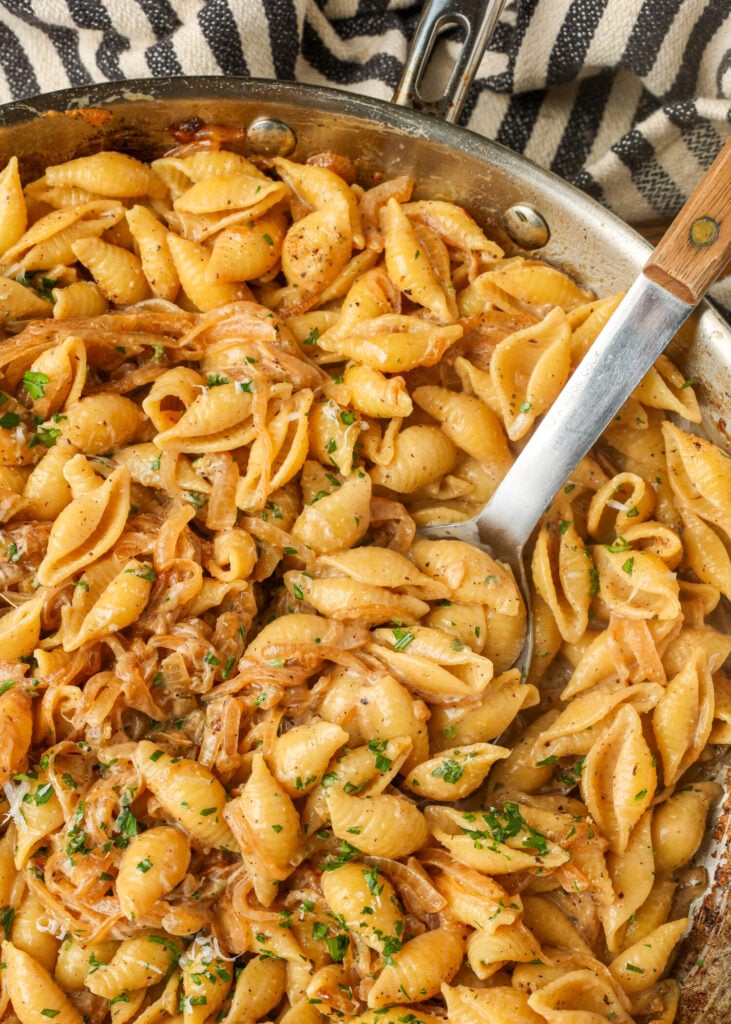
This creamy, rich Caramelized Onion Pasta has been a surprise hit lately. While this is an easy one to double for meal prep, my boys rarely leave leftovers either way. That’s pretty much the highest compliment I can get.
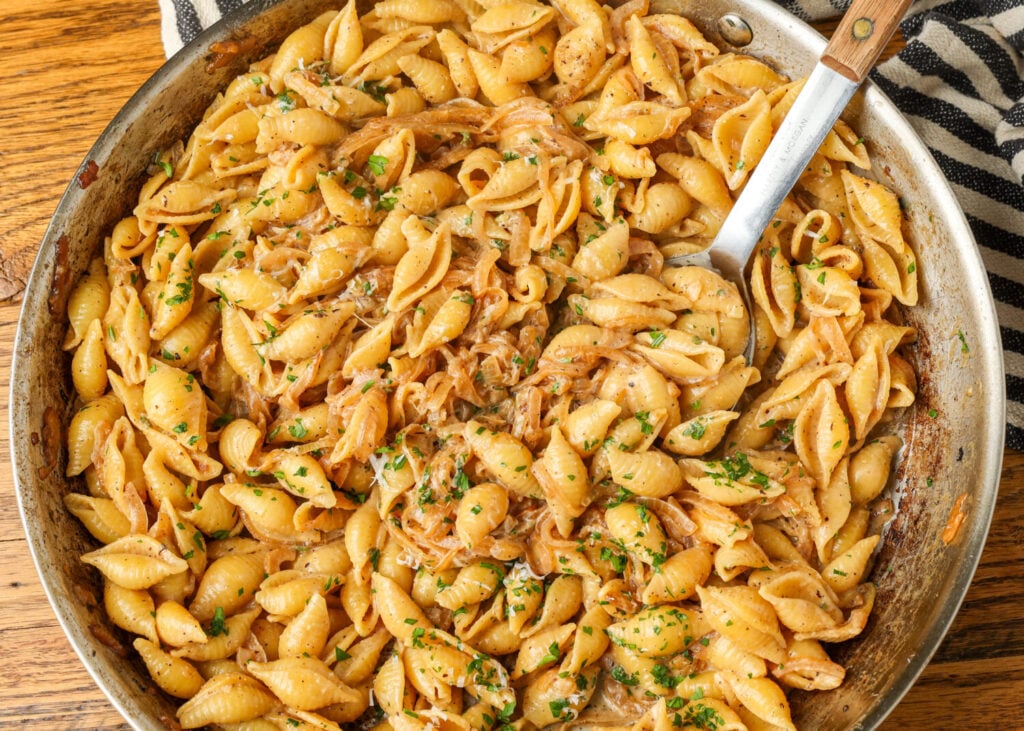
I first made this dish after my family and I fell in love with these super easy slow cooked caramelized onions. I was looking for ways to include them in some meals. Since then, this pasta has become a weeknight dinner highlight that we all enjoy.
Caramelized Onion Pasta

When I don’t have slow-cooker onions on hand, I make this recipe exactly as it is written below. And it’s absolutely delicious.
However, if you’re lucky enough to have some leftover caramelized onions stashed in the freezer, or if you’re reading this in the morning and want to start some in the crockpot now, just skip cooking the onion in this recipe. You’ll add in a cup of your pre-cooked caramelized onions to the cream while warming it in the pan before adding the pasta. Then proceed with this recipe as written.
Ingredients and Substitutions
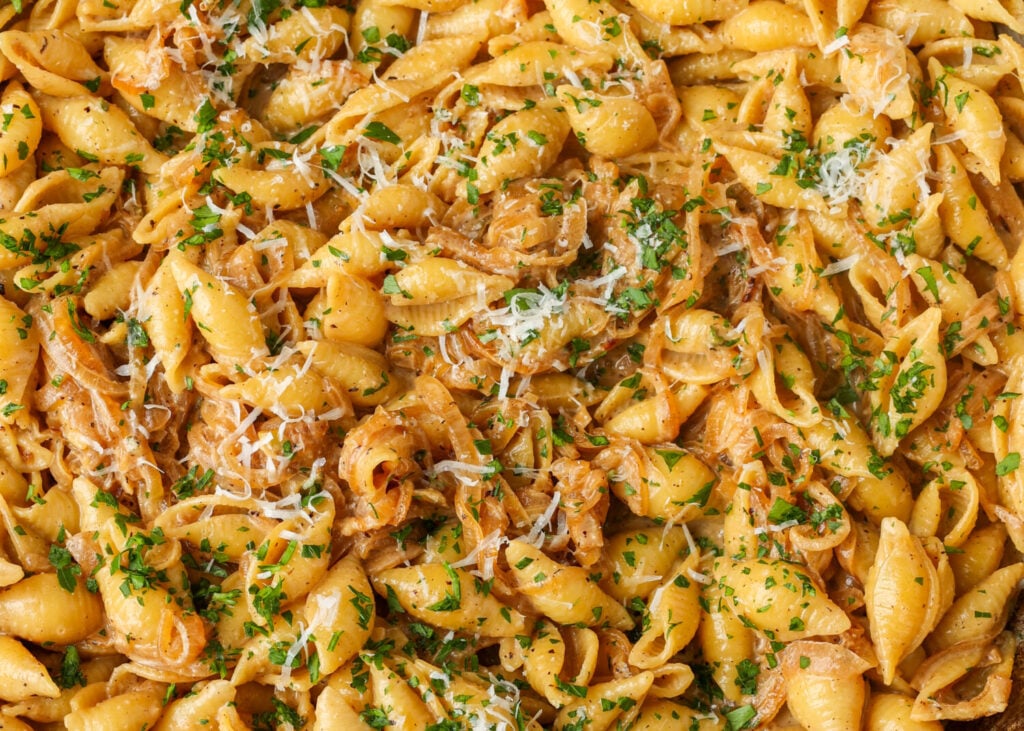
Pasta – I choose a bite-sized noodle. I like shells because they hold plenty of the sauce. But, whatever you have on hand will work.
The Dairy – Heavy cream and salted butter. We’re making a rich cream sauce for this pasta, and that means you can’t skimp on the fats.
Cheese – Break out your Parmesan and shred it fresh for this one. The flavor is wonderfully nutty and adds balance to the sweetness of the onions.
Onions – My first choice for this recipe is my slow cooked caramelized onions. It makes everything so much easier. But, you can also caramelize the yellow onions from scratch!
Garlic – Use freshly minced garlic cloves in this recipe. You can use jarred garlic if you want, but I don’t recommend it. The flavor always tastes a little off to me.
Seasonings – Fresh Italian parsley and thyme add a fresh pop with some earthy notes to this pasta. Don’t swap for dried herbs.
Salt & Pepper – Unless otherwise noted, my recipes always use kosher salt and freshly cracked black pepper.
Extra Ingredients to Caramelize Onions
* Oil – For this pasta (and really, most Italian dishes), I go with extra virgin olive oil.
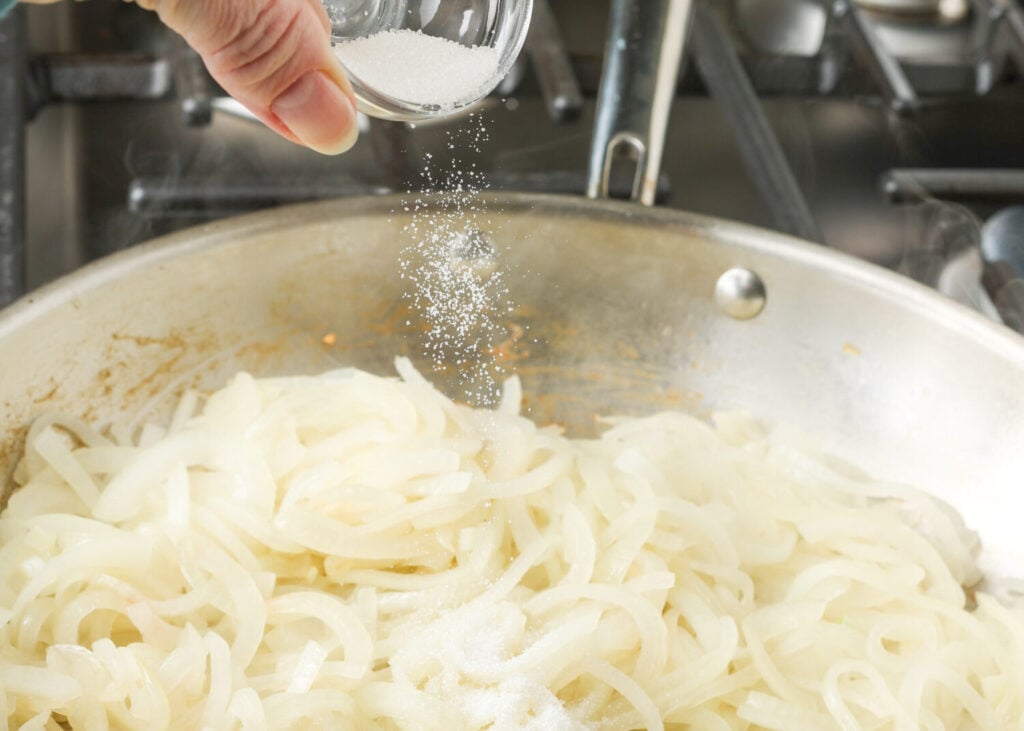
* Sugar – This is a shortcut to help the onions caramelize a bit faster.
* White Wine – You’ll use this to deglaze the pan after we caramelize the onions. Any dry white wine will do. The flavor doesn’t benefit from spending a fortune, so use what’s convenient.
Notes on Equipment
- Large pot for boiling the pasta
- Colander
- Measuring cups and spoons
- Chef’s Knife – Food prep is so much easier when you have a quality knife. It was over 10 years ago when I first tried this knife, while visiting a professional test kitchen. It was love at first slice. These are stellar knives, and the price point simply can’t be beat for quality.
- Cutting board
- Microplane or grater for the cheese
- Wooden spoon or spatula
- Wide pan – If you’ve been with me for long, you probably already know that I really don’t like doing dishes. This high-capacity pan makes it easy because it doubles as a serving dish without a long handle to get in the way.
How to Make Caramelized Onion Pasta
Boiling Water – I fill a large pot with water and bring it to a boil over high heat.
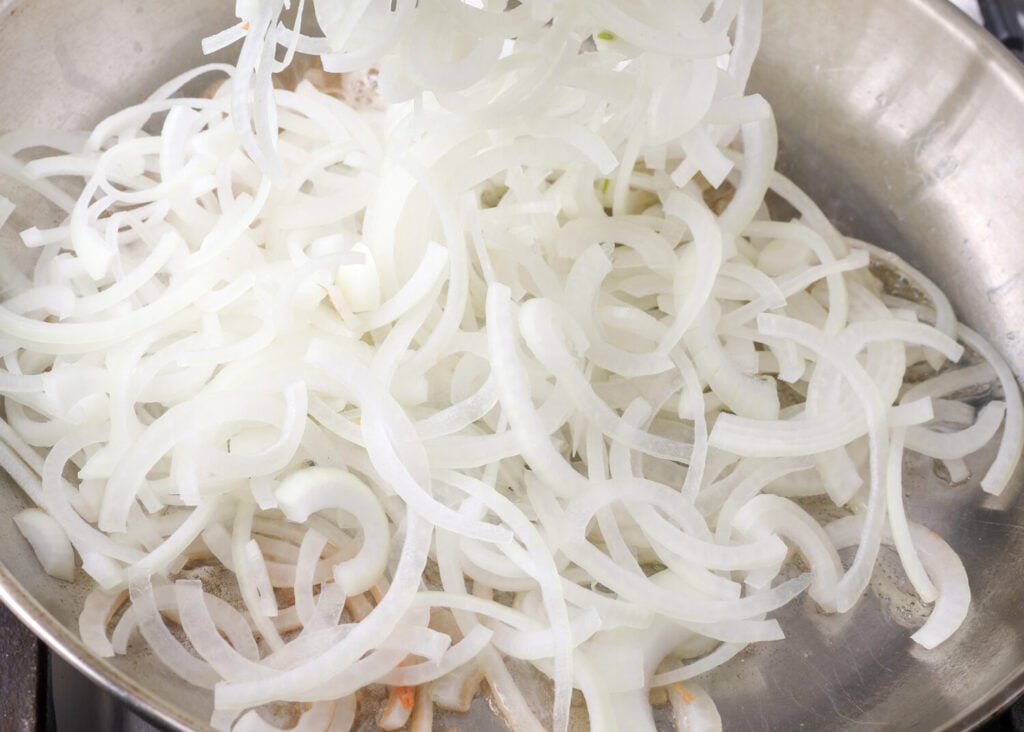
Preparing the Ingredients – While the water is heating up, mince the garlic and shred the parmesan for later. If you’re not using slow cooked onions in this recipe, you’ll need to also thinly slice the yellow onions at this stage.
Starting the Pasta – Once the water is boiling, add the pasta and cook until al dente, usually about 8 to 10 minutes.
Draining the Pasta – After the pasta has finished cooking, drain it, reserving about 2 cups of the leftover water from the pot.
Adding the Butter – I add the butter to a large pan over medium-high heat to heat up.
Caramelizing Onions From Scratch
If you’re using slow-cooked onions, ignore these steps and skip to “Continue Making the Pasta.” But, if you don’t have those already caramelized onions on hand, start on these steps after adding the butter.
Adding the Oil – Measure in the oil to heat up with the butter.
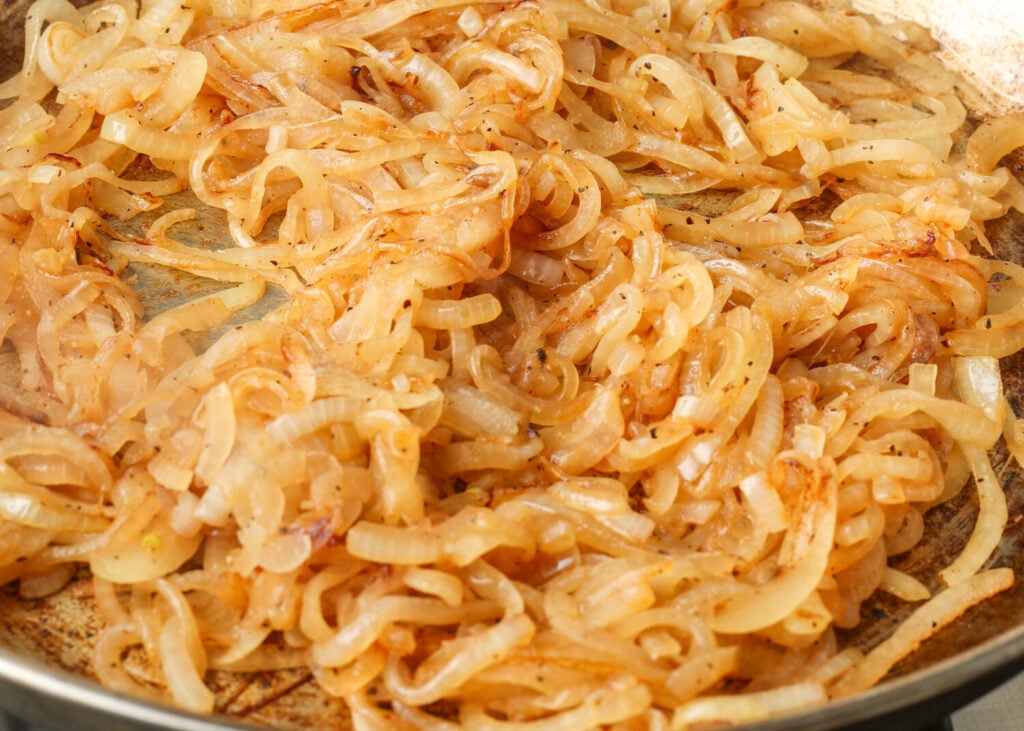
Cooking the Onions – Once the oil and butter have come up to heat, add the yellow onions to the pan and toss until fully coated. Let them cook for about 5 minutes, stirring constantly, until they begin to soften.
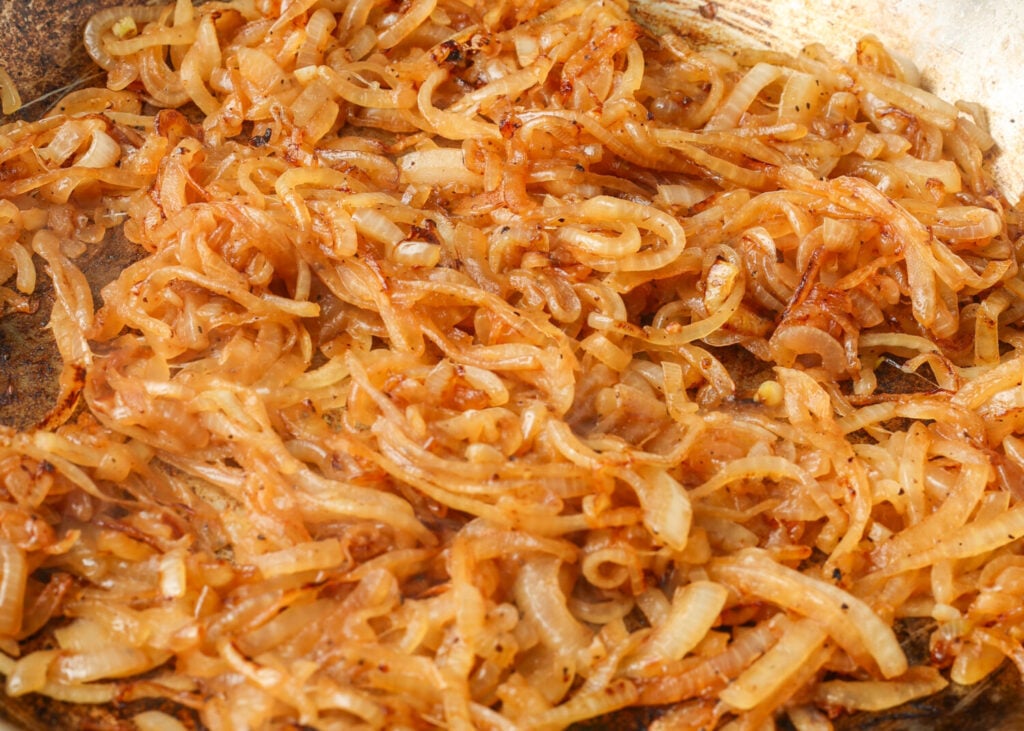
Seasoning the Onions – Once the onions have begun to soften, sprinkle with sugar, salt, and pepper. Let cook for 10 more minutes, until the onions have fully caramelized.
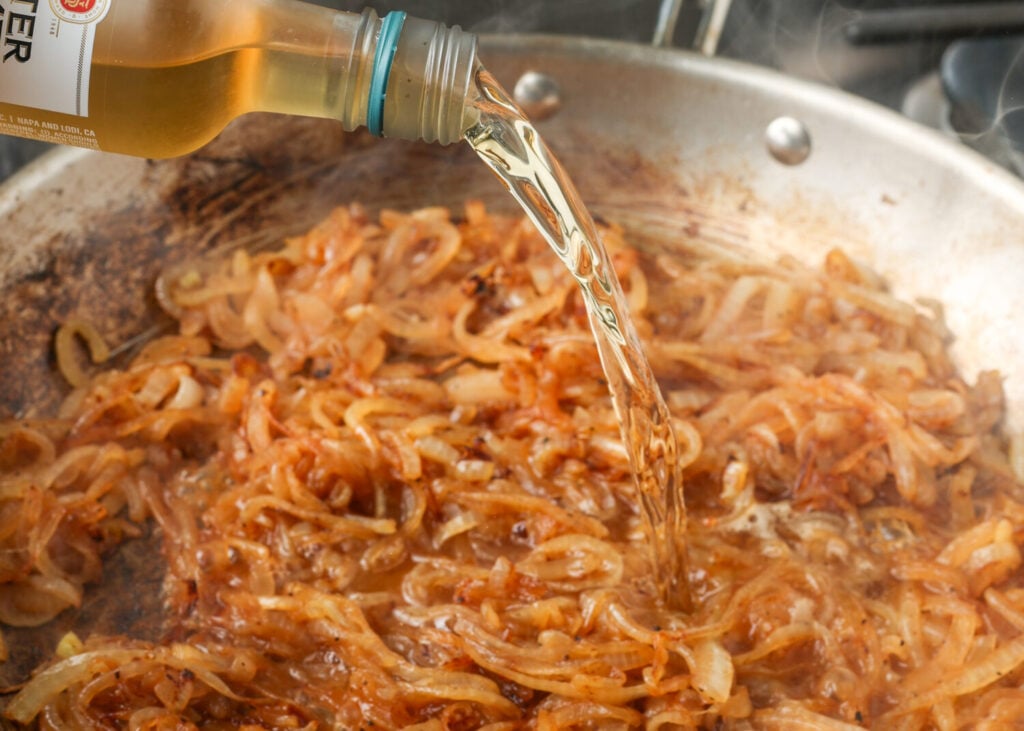
Deglazing the Pan – Add the wine to the pan and use a spatula to scrape up any browned bits from the bottom. Let the wine simmer down before you proceed with adding the garlic.
Continue Making the Pasta
(If using Slow Cooker Caramelized Onions) Warming the Onions – Scoop in your caramelized onions and give them a quick toss.
Adding the Garlic – Reduce the heat to low and add in the garlic. You’ll let it cook for about 30 seconds until fragrant.
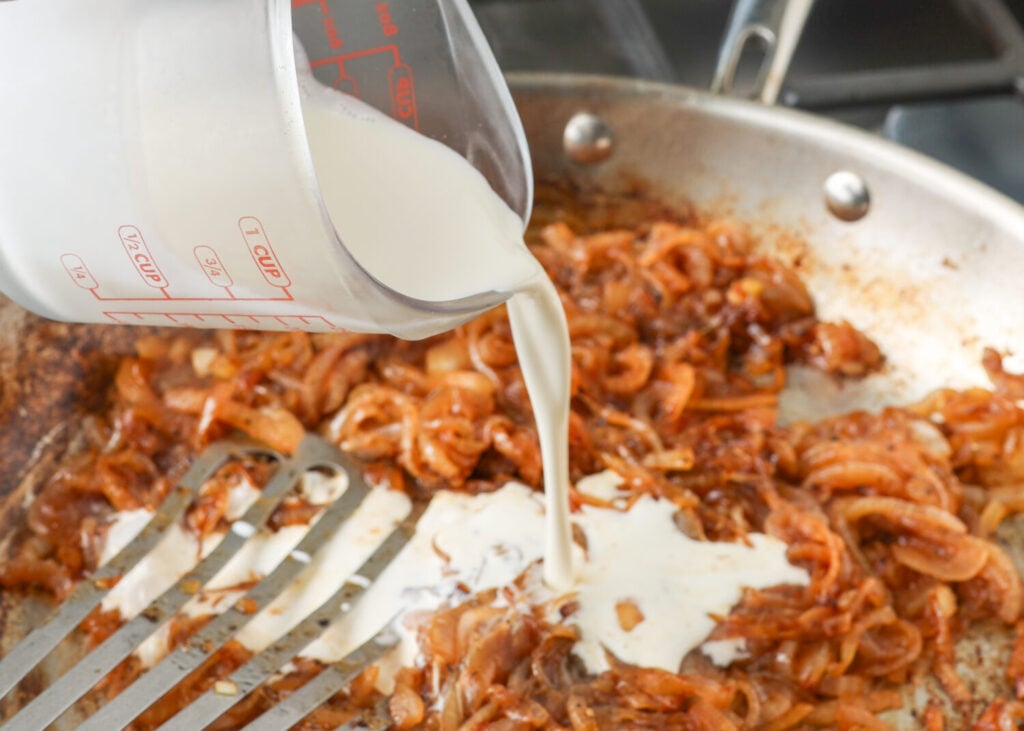
Starting the Sauce – I pour in the heavy cream and add fresh thyme. Bring it up to a simmer then add in the pasta. Stir to coat everything thoroughly.
Adjusting the Sauce – Sprinkle with Parmesan and taste. I add more salt if needed. If the pasta looks too dry at this stage, then you add the reserved pasta water a splash at a time. Stop when it reaches the desired consistency.
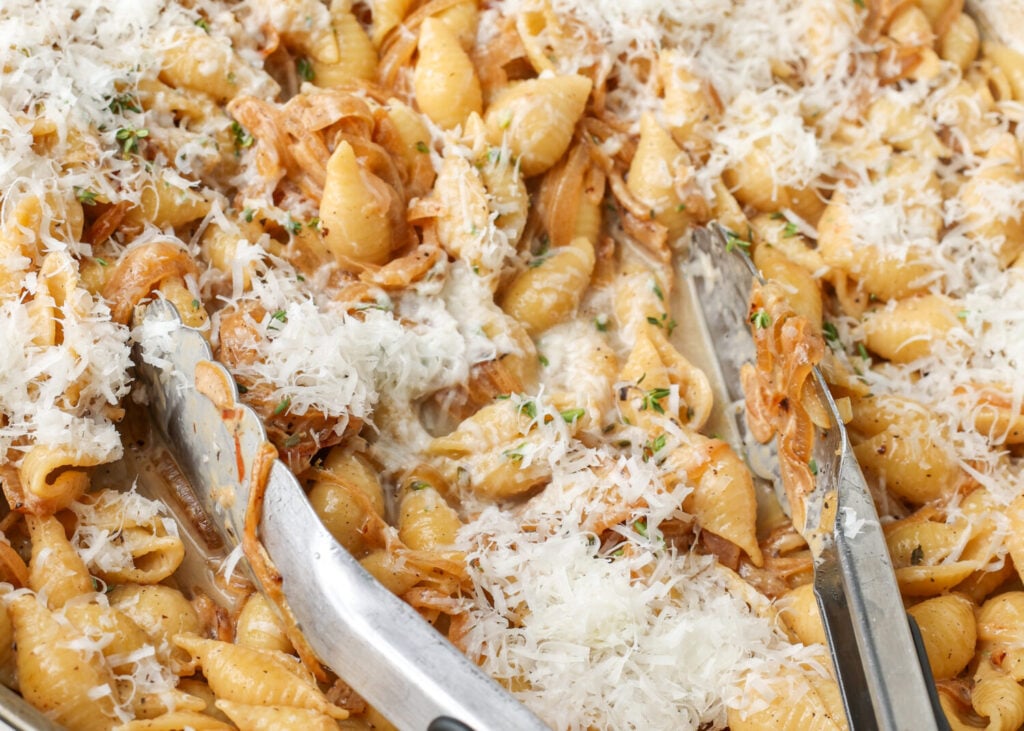
Serving – We sprinkle with fresh chopped Italian parsley and more freshly shredded Parmesan just before serving.
Expert Tip
This recipe takes some shortcuts when caramelizing the onions. And, the biggest one is the heat. Instead of cooking them on low for 45 minutes, we’re cooking them at medium high for about 15 minutes, stirring constantly. I start the process while the water is heating up so that it all finishes at roughly the same time.
Don’t walk away and leave them. They will burn.
That said, everyone’s stove is different. So, if they look like they’re going to burn even while stirring, reduce to medium. Once you’ve got them deeply caramelized and brown, you can proceed with assembling the sauce at low heat.
Give Yourself Some Room – When making caramelized onions, it’s better to use a wide pan. You don’t want to crowd them. Give them plenty of room to breathe, and you’ll also be able to assemble the full pasta in the same pan.
Slice Them Thin – When I slice onions for this recipe, I try to slice them as thinly as possible. I want even slivers that basically melt into the sauce. Not chunks of onions.
A Note on Wine – The alcohol in the wine is simmered away after being used to deglaze the pan. Letting the wine simmer off keeps the sauce from being too thin or acidic. I just follow my nose. It’s usually ready once it no longer smells like alcohol.
Serving Suggestions
This pasta is rich and creamy, which means it goes swimmingly with a fresh, crunchy salad on the side. My recommendations are this kale crunch salad my golden beet salad.
But, if asparagus is in season, oh boy. You need to try this pasta with this lemon pepper asparagus on the side. They work so well together! The brightness of the lemon. The sweetness of the onions. Done.
Make Ahead & Storage
Make Ahead: You can absolutely prep the onions ahead of time. I like to caramelize them in a huge batch and then freeze them for later uses like this. But, cook the pasta fresh.
How to Store: I usually store the leftovers in an airtight container in the fridge. It keeps well for several days.
How to Reheat: If you’re just getting a single portion, you can reheat this pasta in the microwave. When I’m reheating a full batch for the family, I warm the pasta in a pot on the stove with a splash of milk to help revive the sauce.
More Onion Recipes
Frequently Asked Questions
To thicken the sauce, add some more Parmesan cheese. If it’s too thick, just add another splash of the reserved pasta water.
A low sodium chicken broth can be substituted for the wine without trouble. But, if you replace with broth, skip the added kosher salt and taste before adding any salt.
Just the leaves! While you can eat thyme stems, they tend to be very woody and bitter. Thyme leaves are great, though, for infusing sauce with a mild, earthy flavor.
Caramelized Onion Pasta

Ingredients
- 8 ounces bite-size pasta penne, rigatoni, bowtie, fusilli, or shells
- 1 tablespoon olive oil
- 1 tablespoon butter
- 3 large yellow onions about 4 cups worth, very thinly sliced
- 1 teaspoon sugar
- 6 garlic cloves minced
- ½ teaspoon freshly ground black pepper adjust to taste
- 1 teaspoon kosher salt adjust to taste
- ½ cup dry white wine
- 2-4 sprigs of fresh thyme leaves only
- ½ cup heavy cream
- ½ cup freshly shredded Parmesan cheese plus more for serving
- 1 tablespoon fresh Italian parsley chopped small
Instructions
- Bring a large pot of water to a boil over high heat. Add the pasta and cook according to package directions for al dente, stirring occasionally. Drain the pasta, reserving about 2 cups of the pasta cooking liquid.
- While the pasta is cooking, warm 1 tablespoon of oil in a large pot over medium-high heat. Add 1 tablespoon of butter and allow it to melt. Add the onions to the pot and toss to coat. Cook the onions, stirring constantly, until they begin to soften, about 5 minutes.
- Sprinkle with sugar, about ½ teaspoon of salt, and pepper. Continue cooking for 10 more minutes, until the onions are deeply caramelized. Add the garlic and cook about 30 seconds more until fragrant. Add the wine and scrape up any browned bits on the bottom of the pan. Add the fresh thyme and the cream.
- Bring to a low simmer and add the cooked pasta to the sauce. Stir to coat and then sprinkle with Parmesan. If the pasta appears dry, add a splash or two of the reserved pasta water. Taste the pasta and add more salt, only if needed.
- Serve warm, topped with additional Parmesan, pepper, and parsley.
Nutrition
Nutrition information is automatically calculated, so should only be used as an approximation.


